
You don't need an excuse to have beautiful nails. Step outside without worrying about the appearance of your feet.
You don't need an excuse to have beautiful nails. Step outside without worrying about the appearance of your feet.
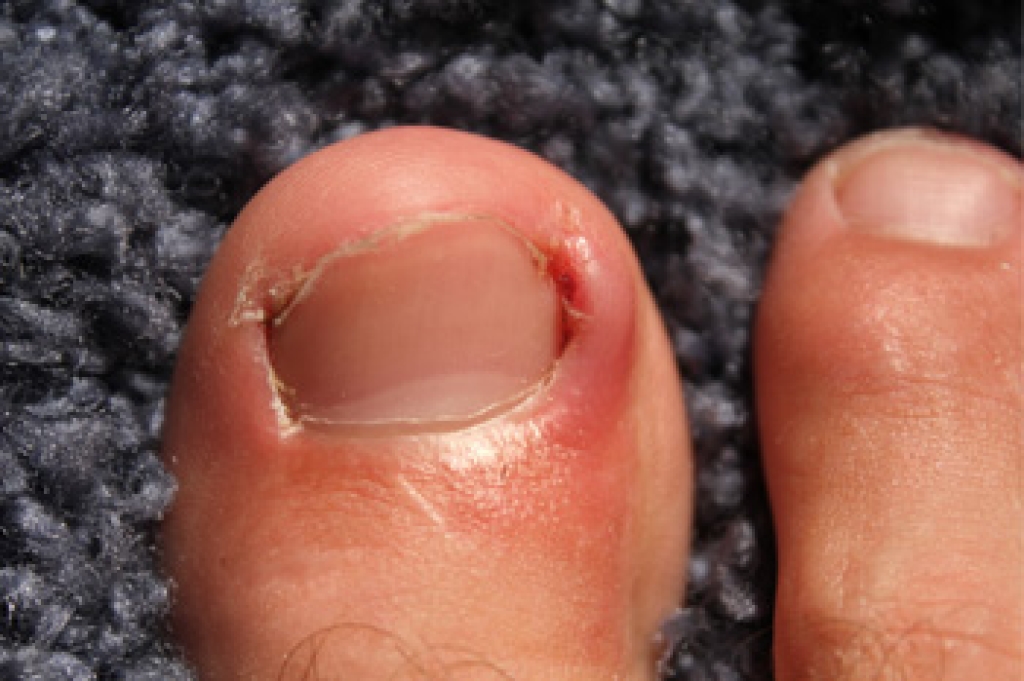 If the side of the toenail has grown into the skin, you may have a condition referred to as an ingrown toenail. It is typically a painful ailment and is often amplified when touched or put into a shoe. There are several causes for this to develop, including toenails that are improperly trimmed, wearing shoes that fit poorly, or a predisposed inherited gene in which the toenails may naturally curl. It is generally simple to notice if you are afflicted with this condition: observe the surrounding area of the nail to see if it is red, swollen, and painful. Treating the toenail as soon as possible can help ease discomfort, and this can be accomplished by soaking the foot in lukewarm water several times during the day. An infection may be avoided by applying an antiseptic on the toe and following by placing a small piece of cotton on the toe for protection. Consult a podiatrist if you have developed an ingrown toenail for more information on treatment options and care.
Ingrown toenails can become painful if they are not treated properly. For more information about ingrown toenails, contact Dr. Kennedy Legel of Advanced Foot & Ankle Care Specialists. Our doctor can provide the care you need to keep you pain-free and on your feet.
Ingrown Toenails
Ingrown toenails occur when a toenail grows sideways into the bed of the nail, causing pain, swelling, and possibly infection.
Causes
Prevention
Wearing proper fitting shoes and using proper cutting techniques will also help decrease your risk of developing ingrown toenails.
Treatment
Ingrown toenails are a very treatable foot condition. In minor cases, soaking the affected area in salt or antibacterial soaps will not only help with the ingrown nail itself, but also help prevent any infections from occurring. In more severe cases, surgery is an option. In either case, speaking to your podiatrist about this condition will help you get a better understanding of specific treatment options that are right for you.
If you have any questions, please feel free to contact our office located in Dallas, TX . We offer the newest diagnostic and treatment technologies for all your foot care needs.
 Real Madrid announced that Portuguese star Cristiano Ronaldo suffered a slight ankle sprain in the team’s 2-2 draw with Barcelona. Ronaldo suffered the injury when Barcelona defender Gerard Pique ran into him from behind on the field. Ronaldo was seen limping from the sideline and originally came back into the game after the injury, but was ultimately taken out of the game at halftime. In regards to the injury, Real Madrid manager Zinedine Zidane says, "We will see tomorrow, with the tests, and do what we need, to see how his ankle is. He is a bit worried, as the ankle is a bit swollen, but he says it is not so much."
Ankle sprains are common but need immediate attention. If you need your feet checked, contact Dr. Kennedy Legel from Advanced Foot & Ankle Care Specialists. Our doctor can provide the care you need to keep you pain-free and on your feet.
How Does an Ankle Sprain Occur?
Ankle sprains take place when the ligaments in your ankle are torn or stretched beyond their limits. There are multiple ways that the ankle can become injured, including twisting or rolling over onto your ankle, putting undue stress on it, or causing trauma to the ankle itself.
What Are the Symptoms?
Preventing a Sprain
Treatment of a Sprain
Treatment of a sprain depends on the severity. Many times, people are told to rest and remain off their feet completely, while others are given an air cast. If the sprain is very severe, surgery may be required.
If you have suffered an ankle sprain previously, you may want to consider additional support such as a brace and regular exercises to strengthen the ankle.
If you have any questions please feel free to contact our office located in Dallas, TX . We offer the newest diagnostic tools and technology to treat your foot and ankle needs.

Do you suffer from heel pain when you get up in the morning? If so, you should seek professional help and have a proper diagnosis performed. Heel pain can be caused by several different foot-related conditions.
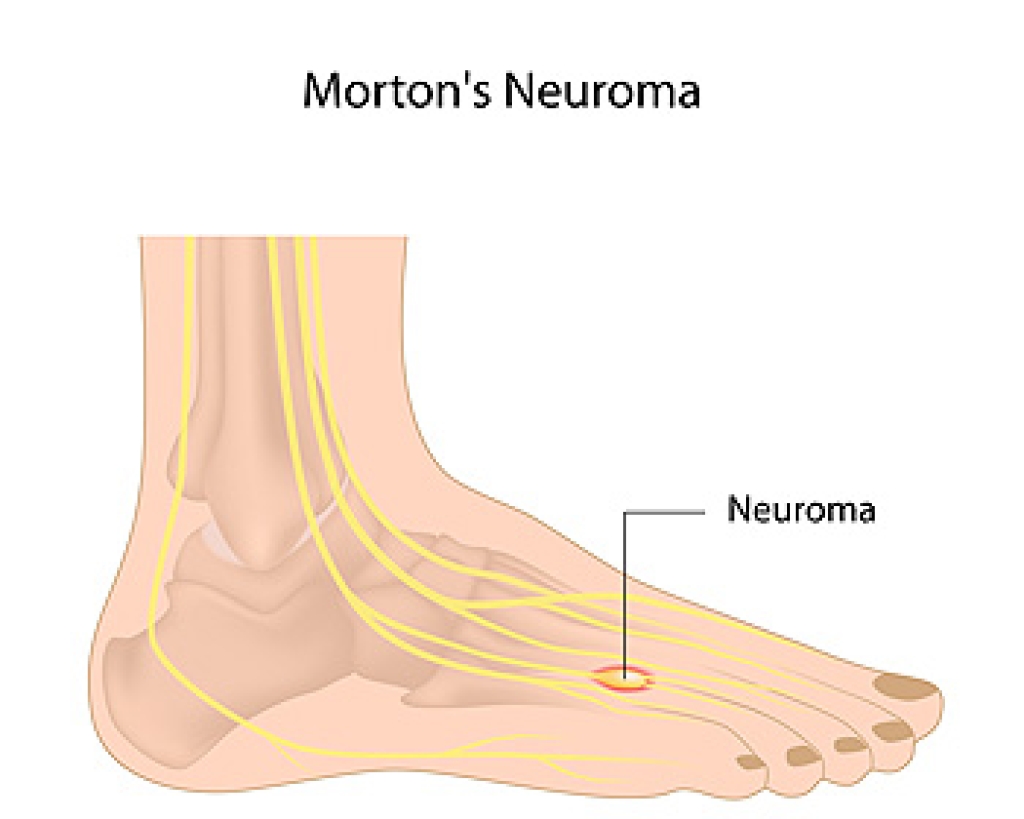
There are several nerves that are located between the bones of the foot, and a condition referred to as Morton’s neuroma will typically affect the nerves between the third and fourth toes. Dr. Morton discovered this condition in 1876 and appropriately named the ailment Morton's Neuroma. It consists of the nerve between the toes becoming thickened, which may be the result of stress the foot has endured. Having sustained an injury to the foot may be a possible cause, in addition to wearing poorly fitting or extremely constrictive shoes, such as high heels. The symptoms can range from a dull ache between the toes to a tingling or burning feeling. To obtain moderate relief, it’s suggested to remove the shoe and gently massage the affected area. Treatment options may include wearing correct footwear which will allow adequate room for the toes to move about, in addition to using orthotics to alleviate some of the pain. Please consider scheduling a consultation with a podiatrist who can perform a correct diagnosis.
Morton’s neuroma is a very uncomfortable condition to live with. If you think you have Morton’s neuroma, contact Dr. Kennedy Legel of Advanced Foot & Ankle Care Specialists. Our doctor will attend to all of your foot care needs and answer any of your related questions.
Morton’s Neuroma
Morton's neuroma is a painful foot condition that commonly affects the areas between the second and third or third and fourth toe, although other areas of the foot are also susceptible. Morton’s neuroma is caused by an inflamed nerve in the foot that is being squeezed and aggravated by surrounding bones.
What Increases the Chances of Having Morton’s Neuroma?
Morton’s neuroma is a very treatable condition. Orthotics and shoe inserts can often be used to alleviate the pain on the forefront of the feet. In more severe cases, corticosteroids can also be prescribed. In order to figure out the best treatment for your neuroma, it’s recommended to seek the care of a podiatrist who can diagnose your condition and provide different treatment options.
If you have any questions, please feel free to contact our office located in Dallas, TX . We offer the newest diagnostic and treatment technologies for all your foot care needs.
