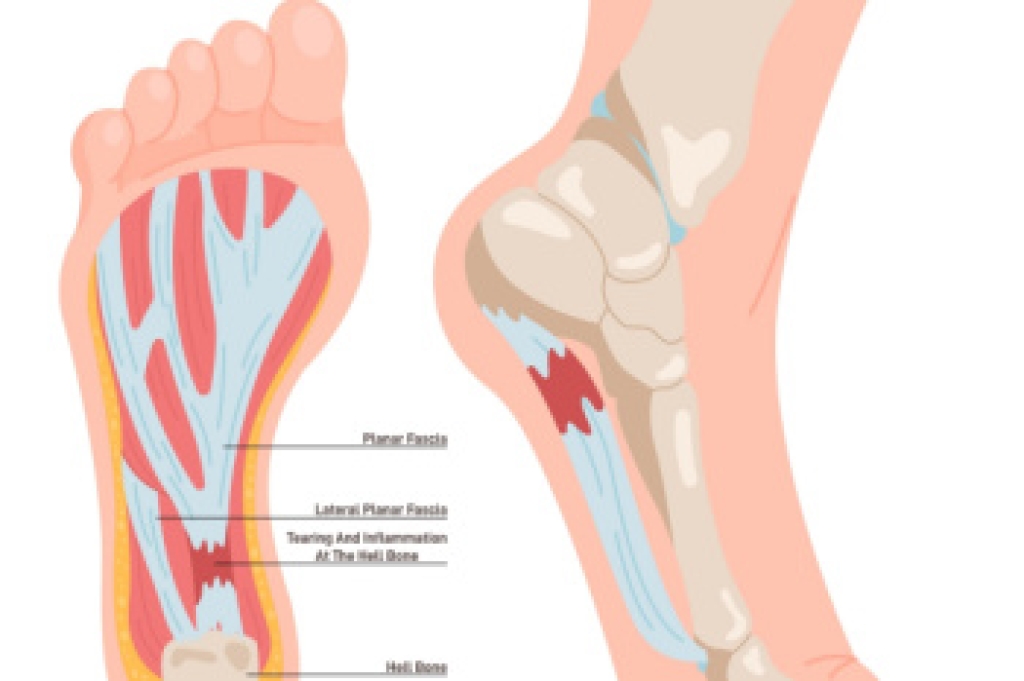
Plantar Fasciitis Is a Degenerative Foot Condition

Plantar fasciitis is a foot condition characterized by inflammation and degeneration of the plantar fascia, a thick band of tissue that runs along the bottom of the foot, connecting the heel to the toes. This condition often develops gradually over time, resulting from repetitive strain and stress on the plantar fascia. Activities that involve prolonged standing, walking, or running, especially on hard surfaces, can worsen the problem. Additionally, factors such as obesity, tight calf muscles, high arches, flat feet, and non-supportive footwear can increase the risk of developing plantar fasciitis. Symptoms include heel pain, particularly in the morning or after periods of inactivity, which can worsen with activity. While plantar fasciitis can be challenging to manage, various treatment options, including rest, stretching exercises, orthotic devices, and in severe cases, corticosteroid injections or surgery, can help alleviate pain and promote healing. If you have persistent heel pain, it is strongly suggested that you consult a podiatrist who can accurately diagnose and treat the cause.

Plantar fasciitis can be very painful and inconvenient. If you are experiencing heel pain or symptoms of plantar fasciitis, contact Dr. Kennedy Legel  from Advanced Foot & Ankle Care Specialists. Our doctor can provide the care you need to keep you pain-free and on your feet.

What Is Plantar Fasciitis?

Plantar fasciitis is the inflammation of the thick band of tissue that runs along the bottom of your foot, known as the plantar fascia, and causes mild to severe heel pain.

What Causes Plantar Fasciitis?

  • Excessive running
  • Non-supportive shoes
  • Overpronation
  • Repeated stretching and tearing of the plantar fascia

How Can It Be Treated?

  • Conservative measures – anti-inflammatories, ice packs, stretching exercises, physical therapy, orthotic devices
  • Shockwave therapy – sound waves are sent to the affected area to facilitate healing and are usually used for chronic cases of plantar fasciitis
  • Surgery – usually only used as a last resort when all else fails. The plantar fascia can be surgically detached from the heel

While very treatable, plantar fasciitis is definitely not something that should be ignored. Especially in severe cases, speaking to your doctor right away is highly recommended to avoid complications and severe heel pain. Your podiatrist can work with you to provide the appropriate treatment options tailored to your condition.

If you have any questions, please feel free to contact our office located in Dallas, TX . We offer the newest diagnostic and treatment technologies for all your foot care needs.


Read more about Plantar Fasciitis

Managing Osteoarthritis of the Ankle

Ankle osteoarthritis typically arises after an ankle injury, causing persistent pain, swelling, stiffness, and reduced flexibility. Treatment options of ankle osteoarthritis aim to alleviate symptoms and improve joint function, with a focus on enhancing range of motion and strengthening supportive muscles. Low-impact exercises like swimming and biking also help to reduce stress on the joint. Weight management plays an important role, and even a modest weight loss offers significant pain relief. Supportive footwear and custom orthotics can provide stability and cushioning, while easing discomfort. Medications such as nonsteroidal anti-inflammatory drugs, and NSAIDs, may offer temporary relief, though long-term use requires caution. Surgery, such as joint stabilization or ankle replacement, remains a last resort, especially for younger patients. Seeking timely medical intervention and adopting a comprehensive treatment approach tailored to individual needs is vital. If you are suffering from ankle osteoarthritis, it is suggested that you make an appointment with a podiatrist for a diagnosis and treatment options. 

Arthritis can be a difficult condition to live with. If you are seeking treatment, contact Dr. Kennedy Legel from Advanced Foot & Ankle Care Specialists. Our doctor can provide the care you need to keep you pain-free and on your feet.

Arthritic Foot Care  

Arthritis is a term that is commonly used to describe joint pain.  The condition itself can occur to anyone of any age, race, or gender, and there are over 100 types of it.  Nevertheless, arthritis is more commonly found in women compared to men, and it is also more prevalent in those who are overweight. The causes of arthritis vary depending on which type of arthritis you have. Osteoarthritis for example, is often caused by injury, while rheumatoid arthritis is caused by a misdirected immune system.

Symptoms

  • Swelling
  • Pain
  • Stiffness
  • Decreased Range of Motion

Arthritic symptoms range in severity, and they may come and go. Some symptoms stay the same for several years but could potentially get worse with time. Severe cases of arthritis can prevent its sufferers from performing daily activities and make walking difficult.

Risk Factors

  • Occupation – Occupations requiring repetitive knee movements have been linked to osteoarthritis
  • Obesity – Excess weight can contribute to osteoarthritis development
  • Infection – Microbial agents can infect the joints and trigger arthritis
  • Joint Injuries – Damage to joints may lead to osteoarthritis
  • Age – Risk increases with age
  • Gender –Most types are more common in women
  • Genetics – Arthritis can be hereditary

If you suspect your arthritis is affecting your feet, it is crucial that you see a podiatrist immediately. Your doctor will be able to address your specific case and help you decide which treatment method is best for you.

If you have any questions please feel free to contact our office located in Dallas, TX . We offer the newest diagnostic tools and technology to treat your foot and ankle needs.

Read more about How to Care for Your Arthritic Foot

Help for Non-Healing Diabetic Foot Ulcers

Non-healing foot ulcers in diabetic patients are influenced by a myriad of factors, including the wound environment, the patient's general health, and the medications they are taking. A compromised wound environment, often characterized by high bacterial load, excess moisture, or inadequate blood supply due to peripheral arterial disease, can impede healing. Additionally, the patient's overall health status plays a significant role, with conditions like obesity, smoking, and immune system deficiencies hindering the body's ability to repair tissues. Medications such as corticosteroids and certain chemotherapeutic agents may also interfere with wound healing processes. Addressing these multifaceted challenges requires a comprehensive approach, encompassing wound debridement, infection control, and optimizing the patient's general health through lifestyle modifications and medication adjustments. If you suffer from diabetic foot ulcers, it is strongly suggested that you are under a podiatrist to enhance healing outcomes and reduce the risk of serious complications.

Wound care is an important part in dealing with diabetes. If you have diabetes and a foot wound or would like more information about wound care for diabetics, consult with Dr. Kennedy Legel from Advanced Foot & Ankle Care Specialists. Our doctor will assess your condition and provide you with quality foot and ankle treatment.

What Is Wound Care?

Wound care is the practice of taking proper care of a wound. This can range from the smallest to the largest of wounds. While everyone can benefit from proper wound care, it is much more important for diabetics. Diabetics often suffer from poor blood circulation which causes wounds to heal much slower than they would in a non-diabetic. 

What Is the Importance of Wound Care?

While it may not seem apparent with small ulcers on the foot, for diabetics, any size ulcer can become infected. Diabetics often also suffer from neuropathy, or nerve loss. This means they might not even feel when they have an ulcer on their foot. If the wound becomes severely infected, amputation may be necessary. Therefore, it is of the upmost importance to properly care for any and all foot wounds.

How to Care for Wounds

The best way to care for foot wounds is to prevent them. For diabetics, this means daily inspections of the feet for any signs of abnormalities or ulcers. It is also recommended to see a podiatrist several times a year for a foot inspection. If you do have an ulcer, run the wound under water to clear dirt from the wound; then apply antibiotic ointment to the wound and cover with a bandage. Bandages should be changed daily and keeping pressure off the wound is smart. It is advised to see a podiatrist, who can keep an eye on it.

If you have any questions please contact our office located in Dallas, TX . We offer the newest diagnostic and treatment technologies for all your foot and ankle needs.

Read more about Wound Care

Are You Suffering From Ingrown Toenails?

If left untreated, an ingrown toenail can lead to more serious concerns, such as an infection. Knowing proper nail care can help in the prevention of an ingrown toenail. Give us a call, and get treated!

Various Types of Foot Protection at Work

In the realm of workplace safety, protecting one's feet is vital to prevent injuries and ensure productivity. Several types of foot protection options cater to diverse work environments and hazards. Safety shoes, featuring reinforced toe caps and slip-resistant soles, provide basic protection against impacts and slips in various industries. Steel-toed boots offer enhanced durability and impact resistance, making them ideal for construction and heavy-duty environments. Metatarsal guards add an extra layer of defense by protecting the delicate bones in the midfoot region from crushing or impacts. For workers exposed to electrical hazards, specialized footwear provides insulation against electrical currents, reducing the risk of shock or electrocution. Each type of foot protection serves a unique purpose, tailored to specific workplace risks and requirements. If you have injured your foot while working, and are looking to learn more about what type of shoes to purchase for total foot protection, it is suggested that you visit a podiatrist who can offer treatment and provide you with the information you are seeking.

While working on the feet, it is important to take the proper care of them. For more information about working on your feet, contact Dr. Kennedy Legel from Advanced Foot & Ankle Care Specialists. Our doctor will treat your foot and ankle needs.

Working on Your Feet

Standing on your feet for long periods of time can cause stress and pain in your feet. Your whole body may experience change in terms of posture, back pain, bunions, callouses and or plantar warts. There are ways to avoid these conditions with proper foot care, smart choices and correct posture.

Positive Changes

Negative heeled shoe – Choosing this shoe type places the heel slightly lower than the ball of the foot. These are great for overall foot health. Find shoes that fit you correctly.

Go barefoot – Our feet were not designed to be enclosed for all hours of the day. Try to periodically expose your feet to air.

Eliminate Pain

Foot Exercises – Performing simple exercises, incorporating yoga and doing stretches are beneficial. This will allow increased blood flow to the area and muscles of the foot.

Achilles tendon – Stretching the foot out flat on the floor will relax the calf muscles and tendon. These exercises can be performed almost anywhere. Make sure you add these exercises to your daily regimen. 

With a little bit of this information and knowing more about foot health, you will notice changes. Foot stretches and proper footwear will help with pain and prevent further issues.

If you have any questions please contact our office located in Dallas, TX . We offer the newest diagnostic and treatment technologies for all your foot and ankle needs.

Read more about Working on Your Feet
scroll to top