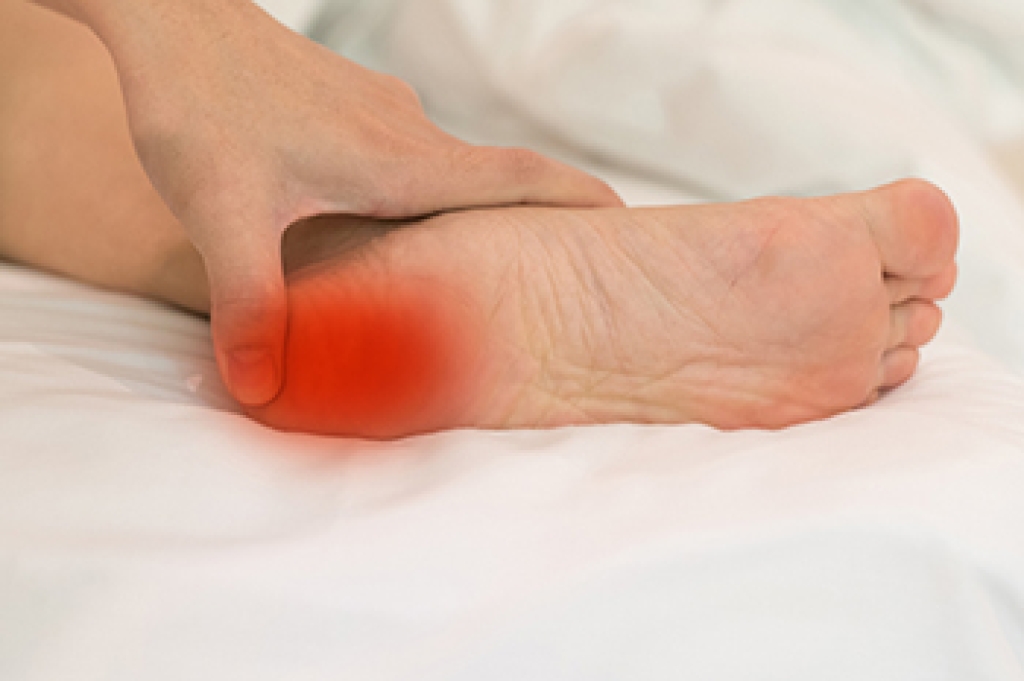
Symptoms and Causes of a Bruised Heel

If you walk or run a lot, you may end up with a bruised heel, an injury that is different from plantar fasciitis. Symptoms of a bruised heel include pain in the bottom of the heel, or the calcaneus, as well as redness or purple bruising on the outside of the heel. A bruised heel can also be caused by sudden trauma to the heel, such as a hard landing from a high jump onto a hard surface. The resulting pain is from an injured fat pad and can take up to three weeks to heal, but if the bone is also injured it may take longer. Additional causes of a bruised heel include wearing flip-flops, landing on your heels when you run, running or walking on hard surfaces, and stepping on a hard stone. Factors that increase risk of heel bruising are obesity, inadequate cushioning in running shoes, overtraining, and running in bare feet. The first thing to do when you have sustained a bruised heel is to cease activity. Consider seeing a podiatrist for information about inserts for your shoes that can provide better cushioning of the heels. 

Many people suffer from bouts of heel pain. For more information, contact Dr. Kennedy Legel of Advanced Foot & Ankle Care Specialists. Our doctor can provide the care you need to keep you pain-free and on your feet.

Causes of Heel Pain

Heel pain is often associated with plantar fasciitis. The plantar fascia is a band of tissues that extends along the bottom of the foot. A rip or tear in this ligament can cause inflammation of the tissue.

Achilles tendonitis is another cause of heel pain. Inflammation of the Achilles tendon will cause pain from fractures and muscle tearing. Lack of flexibility is also another symptom.

Heel spurs are another cause of pain. When the tissues of the plantar fascia undergo a great deal of stress, it can lead to ligament separation from the heel bone, causing heel spurs.

Why Might Heel Pain Occur?

  • Wearing ill-fitting shoes                
  • Wearing non-supportive shoes
  • Weight change           
  • Excessive running

Treatments

Heel pain should be treated as soon as possible for immediate results. Keeping your feet in a stress-free environment will help. If you suffer from Achilles tendonitis or plantar fasciitis, applying ice will reduce the swelling. Stretching before an exercise like running will help the muscles. Using all these tips will help make heel pain a condition of the past.

If you have any questions, please feel free to contact our office located in Dallas, TX . We offer the newest diagnostic and treatment technologies for all your foot care needs.


Read more about Heel Pain

Dealing With Plantar Warts

If you notice a flat hardened callus on the bottom of your foot with tiny black spots showing beneath the skin, you may have a plantar wart. The area might be tender, but try not to touch it. This growth may be caused by the human papillomavirus (HPV), which is highly contagious and can enter your body through cuts or sores. The most common places to come into contact with HPV are swimming pools, locker rooms, and bathroom floors, all areas in which you are more likely to walk barefooted. Generally speaking, plantar warts are not dangerous, but they do spread rapidly. The most effective preventative method is to wear foot coverings in places where the virus thrives. If plantar warts become a common occurrence, refuse to go away on their own, or inhibit your ability to walk, it is a good idea to visit a podiatrist for guidance and a range of treatment options.

Plantar warts can be very uncomfortable. If you need your feet checked, contact Dr. Kennedy Legel from Advanced Foot & Ankle Care Specialists. Our doctor will assist you with all of your foot and ankle needs.

About Plantar Warts

Plantar warts are the result of HPV, or human papillomavirus, getting into open wounds on the feet. They are mostly found on the heels or balls of the feet.

While plantar warts are generally harmless, those experiencing excessive pain or those suffering from diabetes or a compromised immune system require immediate medical care. Plantar warts are easily diagnosed, usually through scraping off a bit of rough skin or by getting a biopsy.

Symptoms

  • Lesions on the bottom of your feet, usually rough and grainy
  • Hard or thick callused spots
  • Wart seeds, which are small clotted blood vessels that look like little black spots
  • Pain, discomfort, or tenderness of your feet when walking or standing

Treatment

  • Freezing
  • Electric tool removal
  • Laser Treatment
  • Topical Creams (prescription only)
  • Over-the-counter medications

To help prevent developing plantar warts, avoid walking barefoot over abrasive surfaces that can cause cuts or wounds for HPV to get into. Avoiding direct contact with other warts, as well as not picking or rubbing existing warts, can help prevent the further spread of plantar warts. However, if you think you have developed plantar warts, speak to your podiatrist. He or she can diagnose the warts on your feet and recommend the appropriate treatment options.

If you have any questions, please feel free to contact our office located in Dallas, TX . We offer the newest diagnostic and treatment technologies for all your foot care needs.

Read more about What Are Plantar Warts?

Are Bunions Affecting Your Everyday Life?

Have you noticed a bony protrusion on the side of your big toe? If so, you may have developed the foot condition known as a bunion. Don't let bunions interfere with your daily activities.

Simple Methods That May Help to Prevent Running Injuries

Many people who enjoy running can experience a small amount of normal discomfort. This may be from strengthening the heart and leg muscles. Additionally, there are people who have persistent pain, and this is something that requires immediate attention. An improper running form or increasing distance and intensity too soon could result in injury. A common foot injury that affects the heel is known as plantar fasciitis, and this can cause difficulty in walking. There are simple methods that can help prevent running injuries. These methods consist of wearing shoes that fit correctly, in addition to avoiding running on uneven surfaces. Many runners can experience a stress fracture which is a hairline fracture. This type of injury is often ignored and can lead to severe pain and discomfort. This condition may be prevented by properly warming up and cooling down before running. An ankle sprain generally requires running to be stopped temporarily so an effective healing process can take place. If you would like more information about how to prevent running injuries, please confer with a podiatrist.

All runners should take extra precaution when trying to avoid injury. If you have any concerns about your feet, contact Dr. Kennedy Legel of Advanced Foot & Ankle Care Specialists. Our doctor will treat your foot and ankle needs.

How to Prevent Running Injuries

There are a lot of mistakes a runner can make prior to a workout that can induce injury. A lot of athletes tend to overstretch before running, instead of saving those workouts for a post-run routine. Deep lunges and hand-to-toe hamstring pulls should be performed after a workout instead of during a warmup. Another common mistake is jumping into an intense routine before your body is physically prepared for it. You should try to ease your way into long-distance running instead of forcing yourself to rush into it.

More Tips for Preventing Injury

  • Incorporate Strength Training into Workouts - This will help improve the body’s overall athleticism
  • Improve and Maintain Your Flexibility – Stretching everyday will help improve overall performance
  • “Warm Up” Before Running and “Cool Down” Afterward – A warm up of 5-10 minutes helps get rid of lactic acid in the muscles and prevents delayed muscle soreness
  • Cross-Training is Crucial
  • Wear Proper Running Shoes
  • Have a Formal Gait Analysis – Poor biomechanics can easily cause injury

If you have any questions, please feel free to contact our office located in Dallas, TX . We offer the newest diagnostic and treatment technologies for all your foot care needs.

Read more about Preventing Running Injuries

Does My Ankle Fracture Need Surgery?

An ankle fracture can happen from suddenly twisting your ankle. This can happen from falling, or possibly from stepping off of a curb unexpectedly. The ankle ligaments may be affected, and surgery may be needed for permanent repair. A surgical benefit can consist of putting the bones back together in proper formation for proper healing. When this is done correctly, treatment can begin by using a walker or cast. During ankle surgery, the broken bones will be exposed on the inner and outside of the ankle. Screws and plates may be used to permanently hold the bones together, and  can generally take several weeks to recover. After an appropriate time has passed, it is beneficial to perform specific exercises that can help to strengthen the ankle after surgery. Recovery typically begins with resting the affected ankle on a pillow, and it may help to keep it elevated which can diminish existing swelling. If you have broken your ankle, it is strongly suggested that you contact a podiatrist who can offer you correct treatment options, which may include surgery.

Foot surgery is sometimes necessary to treat a foot ailment. To learn more, contact Dr. Kennedy Legel of Advanced Foot & Ankle Care Specialists. Our doctor will assist you with all of your foot and ankle needs.

When Is Surgery Necessary?

Foot and ankle surgery is generally reserved for cases in which less invasive, conservative procedures have failed to alleviate the problem. Some of the cases in which surgery may be necessary include:

  • Removing foot deformities like bunions and bone spurs
  • Severe arthritis that has caused bone issues
  • Cosmetic reconstruction

What Types of Surgery Are There?

The type of surgery you receive will depend on the nature of the problem you have. Some of the possible surgeries include:

  • Bunionectomy for painful bunions
  • Surgical fusion for realignment of bones
  • Neuropathy decompression surgery to treat nerve damage

Benefits of Surgery

Although surgery is usually a last resort, it can provide more complete pain relief compared to non-surgical methods and may allow you to finally resume full activity.

Surgical techniques have also become increasingly sophisticated. Techniques like endoscopic surgery allow for smaller incisions and faster recovery times.

If you have any questions, please feel free to contact our office located in Dallas, TX . We offer the newest diagnostic and treatment technologies for all your foot care needs.

Read more about Foot and Ankle Surgery
scroll to top