Items filtered by date: February 2026
When One Wrong Step Changes Everything
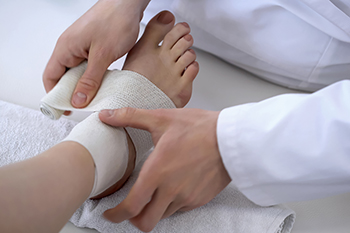
A twisted ankle, also known as an ankle sprain, occurs when the ligaments supporting the ankle are stretched or torn. This can happen during sports, walking, or running on uneven surfaces, or with sudden missteps. The ankle may look swollen, bruised, or puffy, and in some cases, appear unstable or misshapen. It often feels painful right away, with sensations ranging from sharp pain to aching, stiffness, or tenderness when bearing weight. A podiatrist can help from the start by evaluating the injury, checking joint stability, and using imaging when needed to confirm the diagnosis and rule out fractures. Early treatment may include immobilization, bracing, and activity modification. Care can then progress into strengthening exercises and custom orthotics to restore stability and prevent repeat injuries. Prompt treatment supports proper healing and long-term ankle health. If you think you have sprained your ankle, it is suggested that you make an appointment with a podiatrist.
Although ankle sprains are common, they aren’t always minor injuries. If you need your ankle injury looked at, contact Dr. Kennedy Legel from Advanced Foot & Ankle Care Specialists. Our doctor can provide the care you need to keep you pain-free and on your feet.
How Does an Ankle Sprain Occur?
Ankle sprains are the result of a tear in the ligaments within the ankle. These injuries may happen when you make a rapid shifting movement while your foot is planted. A less common way to sprain your ankle is when your ankle rolls inward while your foot turns outward.
What Are the Symptoms?
- Pain at the sight of the tear
- Bruising/Swelling
- Ankle area is tender to touch
- In severe cases, may hear/feel something tear
- Skin discoloration
Preventing a Sprain
- Wearing appropriate shoes for the occasion
- Stretching before exercises and sports
- Knowing your limits
Treatment of a Sprain
In many cases, the RICE method (Rest, Ice, Compression, and Elevate) is used to treat ankle sprains. However, you should see a podiatrist to see which treatment option would work best with your injury. In severe cases, surgery may be required.
It is important to ask your doctor about rehab options after you receive treatment for your injury. Stretching, strength training, and balance exercises may help the ankle heal while also preventing further injury.
If you have any questions, please feel free to contact our office located in Dallas, TX . We offer the newest diagnostic and treatment technologies for all your foot care needs.
Stages of a Diabetic Foot Ulcer
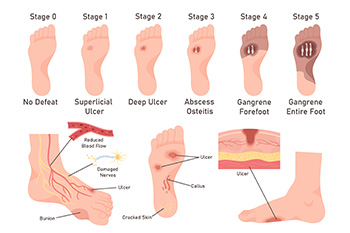
A diabetic foot ulcer is an open sore that develops due to nerve damage, poor circulation, and pressure on the feet in people with diabetes. The process often begins with a normal foot that appears healthy, but may already have reduced sensation. An at-risk foot shows changes like numbness, dry skin, or calluses that increase the chance of skin breakdown. A foot with an ulcer has an open wound that may be slow to heal and can worsen without proper care. An infected foot develops redness, swelling, drainage, and increased pain, raising the risk of serious complications. A podiatrist plays a critical role in identifying each stage early, providing wound care, reducing pressure, and preventing infection. If you have diabetes, it is suggested that you schedule regular visits with a podiatrist to protect your feet, prevent ulcers, and help you in managing his serious condition.
Wound care is an important part in dealing with diabetes. If you have diabetes and a foot wound or would like more information about wound care for diabetics, consult with Dr. Kennedy Legel from Advanced Foot & Ankle Care Specialists. Our doctor will assess your condition and provide you with quality foot and ankle treatment.
What Is Wound Care?
Wound care is the practice of taking proper care of a wound. This can range from the smallest to the largest of wounds. While everyone can benefit from proper wound care, it is much more important for diabetics. Diabetics often suffer from poor blood circulation which causes wounds to heal much slower than they would in a non-diabetic.
What Is the Importance of Wound Care?
While it may not seem apparent with small ulcers on the foot, for diabetics, any size ulcer can become infected. Diabetics often also suffer from neuropathy, or nerve loss. This means they might not even feel when they have an ulcer on their foot. If the wound becomes severely infected, amputation may be necessary. Therefore, it is of the upmost importance to properly care for any and all foot wounds.
How to Care for Wounds
The best way to care for foot wounds is to prevent them. For diabetics, this means daily inspections of the feet for any signs of abnormalities or ulcers. It is also recommended to see a podiatrist several times a year for a foot inspection. If you do have an ulcer, run the wound under water to clear dirt from the wound; then apply antibiotic ointment to the wound and cover with a bandage. Bandages should be changed daily and keeping pressure off the wound is smart. It is advised to see a podiatrist, who can keep an eye on it.
If you have any questions please contact our office located in Dallas, TX . We offer the newest diagnostic and treatment technologies for all your foot and ankle needs.
Simple Stretches to Support a Healthy Foot Arch

Strong, flexible foot arches play an important role in balance, comfort, and long-term mobility. Gentle daily stretching can help reduce tension and improve circulation in the muscles that support the arch. The towel stretch is an easy option that lengthens the plantar fascia and calf by gently pulling the foot toward the body while seated. Another effective technique is the ball roll, which massages the arch and helps release tight tissue by slowly rolling the sole of the foot over a small ball. While these stretches can be helpful, persistent pain or stiffness may signal an underlying issue. A podiatrist can evaluate foot mechanics, identify contributing conditions, and create a personalized treatment plan that may include custom orthotics or advanced care. If you have pain in the arch of your foot, it is suggested that you consult a podiatrist who can offer effective relief tips, which may include additional arch stretches.
Stretching the feet is a great way to prevent injuries. If you have any concerns with your feet consult with Dr. Kennedy Legel from Advanced Foot & Ankle Care Specialists. Our doctor will assess your condition and provide you with quality foot and ankle treatment.
Stretching the Feet
Stretching the muscles in the foot is an important part in any physical activity. Feet that are tight can lead to less flexibility and make you more prone to injury. One of the most common forms of foot pain, plantar fasciitis, can be stretched out to help ease the pain. Stretching can not only ease pain from plantar fasciitis but also prevent it as well. However, it is important to see a podiatrist first if stretching is right for you. Podiatrists can also recommend other ways to stretch your feet. Once you know whether stretching is right for you, here are some excellent stretches you can do.
- Using a foam roller or any cylindrical object (a water bottle or soda can will do), roll the object under your foot back and forth. You should also exert pressure on the object. Be sure to do this to both feet for a minute. Do this exercise three times each.
- Similar to the previous one, take a ball, such as a tennis ball, and roll it under your foot while seated and exert pressure on it.
- Grab a resistance band or towel and take a seat. If you are using a towel, fold it length wise. Next put either one between the ball of your foot and heel and pull with both hands on each side towards you. Hold this for 15 seconds and then switch feet. Do this three times for each foot.
- Finally hold your big toe while crossing one leg over the other. Pull the toe towards you and hold for 15 seconds. Once again do this three times per foot.
It is best to go easy when first stretching your foot and work your way up. If your foot starts hurting, stop exercising and ice and rest the foot. It is advised to then see a podiatrist for help.
If you have any questions please contact our office located in Dallas, TX . We offer the newest diagnostic and treatment technologies for all your foot and ankle needs.
It's Time for Beautiful Feet

You don't need an excuse to have beautiful nails. Step outside without worrying about the appearance of your feet.
Understanding Heel Pain in Growing Kids

Sever’s disease is a common source of heel discomfort in active children and adolescents, especially during growth spurts. It develops when the growth plate at the back of the heel becomes irritated from repeated stress. This often occurs in kids who participate in running or jumping sports, as tight calf muscles and rapid bone growth place extra tension on the heel. It typically affects children between the ages of eight and 14. Symptoms include heel pain during or after activity, tenderness when the heel is squeezed, limping, or avoiding sports they once enjoyed. Pain often improves with rest but returns when activity resumes. Treatment focuses on reducing strain while growth continues. Rest, activity modification, stretching, supportive shoes, heel cushions, and orthotics may be recommended. The condition resolves with time as growth plates mature. If your child has ongoing heel pain, it is suggested that they be evaluated by a podiatrist to confirm the diagnosis and guide care.
Sever's disease often occurs in children and teens. If your child is experiencing foot or ankle pain, see Dr. Kennedy Legel from Advanced Foot & Ankle Care Specialists. Our doctor can treat your child’s foot and ankle needs.
Sever’s Disease
Sever’s disease is also known as calcaneal apophysitis, which is a medical condition that causes heel pain I none or both feet. The disease is known to affect children between the ages of 8 and 14.
Sever’s disease occurs when part of the child’s heel known as the growth plate (calcaneal epiphysis) is attached to the Achilles tendon. This area can suffer injury when the muscles and tendons of the growing foot do not keep pace with bone growth. Therefore, the constant pain which one experiences at the back of the heel will make the child unable to put any weight on the heel. The child is then forced to walk on their toes.
Symptoms
Acute pain – Pain associated with Sever’s disease is usually felt in the heel when the child engages in physical activity such as walking, jumping and or running.
Highly active – Children who are very active are among the most susceptible in experiencing Sever’s disease, because of the stress and tension placed on their feet.
If you have any questions, please feel free to contact our office located in Dallas, TX . We offer the newest diagnostic and treatment technologies for all your foot care needs.
